Showing posts with label ain't nature wonderful. Show all posts

Monday, June 11, 2012

Gotchereyeson?

Whether you're hunting mushrooms, glassing for elk on a hillside or trying to look through water to see the fish, it's all about pattern recognition and what we call, "getting your eyes on." After that first or second sighting of something you're having to pick out of a challenging background, your brain seems to relax and you start seeing the shape you're looking for much more easily.

Same thing happens when we're looking for waterbirds to count. At our refuge we count waterfowl, shore & marsh birds, and raptors twice a month. Sometimes it's about trying to tell cranes from geese in the first light of dawn, or picking out different duck species in a flock of hundreds; sometimes it's just seeing them where they are. Last week provided some of the most interesting -- and rewarding -- exercises in pattern recognition we've had in a while.

Because I was recording sightings for four avid birders my POV was from the middle of the back seat. While everyone else was glassing the sky and nearby telephone poles and trees, my view was kind of like this.

Hey look! That's a...

Killdeer on a clutch of four eggs.


Killdeer (Charadrius vociferus) are fairly common down here but I had never seen a nest before. Had the bird not been on them, I'm not sure we would have noticed the eggs.
Later on we saw this:

Oh look! What's that?!?! Oh yeah...

Green Heron on a nest.


The nest was typical for the Butorides virescens, a basket of small sticks on a branch over the water. Next week we'll be checking for little gray downy chicks; if there's an average clutch of 2-6 green eggs in that nest we are hoping for least a few hatchlings.

Alas, we don't have any nest cams on the refuge (yet) and after a brief look around the web the Green Heron doesn't seem to rate one. If you're interested, you can see young GBHEs at the  Cornell Lab of Ornithology's Great Blue Heron Cam, along with all sorts of other nest cams.

During that same bird survey we also saw a Black-necked Stilt on a nest. We have already seen Snowy Plover chicks and owlets so for the next survey we'll be on the lookout for all manner of fluffy balls o' bird on the ground and in nests. If they're mobile, the chicks should be a little easier to pick out, although as I recall, those SNPL chicks looked like dirty cottonballs drifting across the salt-encrusted grass and beige sands of the lake edge where they nest. Better be gettin' my eyes on...


Friday, June 1, 2012

Garden Life: the Garden is In!

Finally. Last minute travel plans and other events meant seeds didn't go into the ground until the 3rd week in May. And almost everything went in as seed, no indoor starts and only a few bought jalapeno and bell pepper plants this year. It's plenty warm in the daytime and still cooling down nicely at night so the seeds are happily following their genetic imperatives and everything looks promising. However, the weather and water have also jump-started a bumper crop of weeds.

Although may not be the case in a few weeks, my views on weeds thus far flow along these lines:
 Many gardeners will agree that hand-weeding is not the terrible drudgery that it is often made out to be.  Some people find in it a kind of soothing monotony.  It leaves their minds free to develop the plot for their next novel or to perfect the brilliant repartee with which they should have encountered a relative's latest example of unreasonableness.  ~Christopher Lloyd, The Well-Tempered Garden, 1973
'Soothing monotony,' until you really start paying attention to the 'weeds.' Here's what's happening amongst the Tiger Thai Eggplants: 

eggplants in lower left corner; elm seeds, grass and volunteer basil

Okay, everything gets pulled but the basil, we'll get it when it's big enough to season some pasta or serve as a garnish. Of course, all this extra growth is occurring on top of the mound so a hoe is out of the question -- at least in my hands -- and even the Hori Hori has to be used sparingly. The work gets even closer in some areas. Wonder what's supposed to be growing in this row...

not tomatoes... not pole beans... it's a row of Dill, those tiny, 2 leaf seedlings next to the soaker hose

Why all the volunteers? Remember the frozen vegetable section photo from last year's freeze?* The mild winter and lack of moisture must have preserved all kinds of seeds, our own little heirloom seed saver project without the collecting... and the labeling. Some of the volunteers will get to stand their ground and others will go friends' gardens in a week or so when the thinning is done. I don't think they'll mind the addition of mystery tomatoes... unless some of them happen to be Matt's Wild Cherry tomatoes. Those were some of the best cherry tomatoes we've ever had but they were teeny and the skin tore when you picked them so you had to eat them almost immediately, or snip off a bunch still on the stem.  This year, Matt's volunteers will be treated like weeds.

Alas, there has been no inspiration for a novel, although a downright seedy thought came to me while weeding tomatoes from tomatoes: our parsley has bolted and is just starting to flower; a planter or two under the heads for the seeds as they drop should result in another pot of parsley. Yep, that's easy* and... free!!

Flowering parsley; the pollinators are here, yay!

 From weedy & seedy to chic, check out the cool small space gardening ideas at No Ordinary Homestead. This is link-y fun so join us if you can!

*Yes, Intrepid Reader, you know I'm a bit of a lazy gardener. The garden litter did not get picked up with alacrity; I thought it would be good for the soil. Yeah, that's my story... 
 * See? That's a lazy gardener.

Tuesday, May 29, 2012

Since last we met...

Thousands of cranes, waterfowl, marsh birds, and raptors counted.

Great Horned Owlet looks like a fluffy cat on the limb.

Hundreds of ducks banded. Ducks hunted, with a few in the gumbo pot to share with friends.

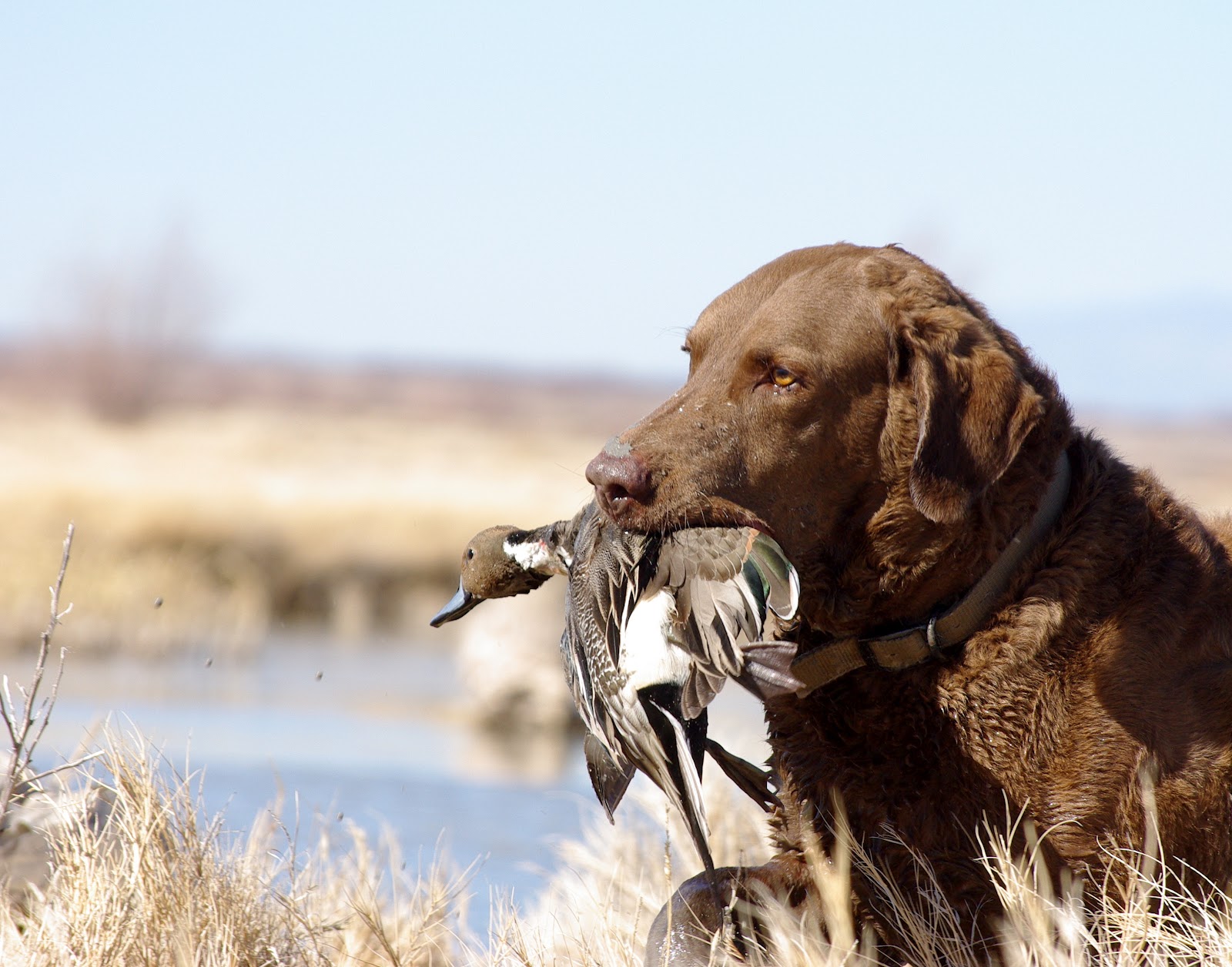
B'Dawg fetches a male Northern Pintail.

Dove hunted...


 then prepped as appetizers for future visitors.

Dove breasts stuffed with cheese and jalapenos, wrapped in bacon
 
Packed for the freezer.

 Deer and turkey scouted and hunted. Alas, no tidy vacuum-sealed packages for the freezer.


 On private land; how did they know the season started?

Traveled to Seattle, WA and Washington, DC for work; to NorCal wine country to celebrate birthdays... 

A cure for palate fatigue: fresh oysters, cold beer, Goat Rock Beach.

and to southwestern Florida for fun while MDMNM was in class all day.*

These birds were regulars on the beach outside our hotel. We see the Snowy Egrets at our refuge fairly often; 
in a rare sighting a few weeks ago we saw a lone Little Blue Heron there, too.

Good friends were hosted. Spring sprung.


And we lost the eldest in our clowder...

You might remember him from this post.

so here we are. Next time we're together, let's go for a walk in the garden.

*Yes, Intrepid Reader, we did manage to get in a half-day of fishing without missing a single CLE credit.


Thursday, January 5, 2012

All in a day's...

work volunteering at a National Wildlife Refuge. Have I told you how privileged I feel to be able to do this? Here's why (in part):

On Wednesday mornings during the winter this is where you'll find me drinking my coffee, waiting for the cranes to fly and be counted.

ah, glorious sunrise


Another view through the window of my mobile office.

The faraway lake is a perfect roosting site for a lovely winter's night

At this refuge the lesser Sandhill Crane population peaked at ~26,000 in early November, at which point we were counting by 100s and 1,000s as they took off en masse. This time of year the cranes are easier to count.

one, two, skip a few...99, 1257

This week is all about the mid-Winter Waterfowl Survey so after the sunrise crane count we head out to look for ducks, geese, etc., in all the usual places, plus in a few of the off-refuge dives they have been known to frequent.

Ross's and Snow Geese on the refuge were counted earlier in the morning so when we kick up this group (the picture is about 10% of what filled the sky), we just stop to enjoy the sights and sounds.

Hundreds of light geese, one small snapshot of a full sky

Our experts say that the refuge's light goose population is about 75% Ross's. In this photo you can see a few adult dark morph Ross's geese. If you embiggen you can endeavor to work out the proportion of this sample that are Ross's* by following Sibley's helpful guide to white goose identification.

Here's another notable refuge dweller who shares our interest in ducks and geese.

Great Horned Owl in a refuge penthouse.


aka Cat Owl guarding the nesting box**

During our bi-weekly bird counts we check the old barns on the refuge to see who is in residence and in the early spring we watch for owlets. In all likelihood this owl is already paired and since nesting season is January and February, we'll be giving these residents a wider berth for the next few months. Great Horned Owls are said to be ferociously protective of their young so for their safety -- and ours!-- we'll be taking pictures from afar until the owlets fledge. At least we hope there are owlets this year, you never know.

The 'farm' portion of refuge is also home to a small herd of Mule Deer, many of whom were taking advantage of the beautiful day.

"Do I look like a duck?!? Do you hear quacking? Move on..."


"Uh, no ma'am. If you're lookin' for ducks, check the water-y areas."

Oh yeah, the waterfowl count...done. Since we were doing a bi-weekly count anyway, the only really cool addition came from a private field that sits between two of the refuge tracts: ~1000 Wigeon (with a few Northern Pintails; you've seen them before).

It's hard to believe that I've been volunteering at the refuge for six months. You've seen my 'office' and met some of my neighbors and co-workers, you just can't beat this for a work environment. I am so lucky to be part of the BioCrew at this refuge, it's non-stop learning and so much fun! When I finally get the opportunity to go back to a full time desk job it will be quite difficult (but oh so necessary).

When I started this work I had no idea that the refuge system was so dependent on the talents, shared passions and sheer brawn of so many volunteers. Volunteers run visitor centers, remove invasive species, lay waterlines, survey all types of flora and fauna year-round (we have people who have been counting birds on a bi-weekly basis for decades!), raise funds for buildings and projects, provide environmental education and outreach, and otherwise fill the resource gaps between what's available to refuge staff and what they really need to fulfill their missions.

If you have an interest or passion for anything remotely related to nature, there's probably a local wildlife refuge with something for you to do. And they need you, for as little or as much time as you can give. Alone or with your family, working on something with which you are familiar or something you've never contemplated before, it's an investment that will give back ten-fold. Hope to see you at the water cooler...


*In our copious spare time, eh, Intrepid Reader? Until then I'll trust the experts.
**Excellent observation, Intrepid Reader! That is a cat litter box; prime real estate for owls the world over.

Monday, December 12, 2011

Just ducky, thank you!

'Tis the season...
We had a good snow a few days ago that put us up to nearly a third of our average yearly precipitation, yay!! However, the relentless cold that accompanied the front has most of the waterways on the refuge frozen, severely reducing our A+ rating among migrating waterfowl. Already our duck count is down, waaaaay down.

M, B-Dawg and I haven't had the time to duck hunt this season so the prospect of no duck gumbo this winter darkened my thoughts as I drove home from the bi-weekly waterfowl count. I was watching the still-icy road rather carefully when something in my peripheral vision caught my attention... that stubble field was not a pristine white landscape, there were odd brown bumps all over it! I slowed down, grabbed the camera and did a u-turn as soon as it was safe, knowing -- Oh Joy!-- what I would find...


wigeon with pintails slumming off-refuge


Although I haven't been hunting yet, I've had more than few ducks in hand over the last few weeks. My local refuge's biologist (BioJefe) participates in the North American Bird Banding project and this time of year it's all about the ducks. You know that highly prized 'jewelry' waterfowlers everywhere add to their lanyards? This is how it gets there...

BioJefe & BioJ  remove duck from trap

talk sweetly to the mallard hen

'with this ring, I thee... tag in the name of science!'

While we have the ducks in hand, a few non-invasive* measurements are taken...

weighing a female bufflehead
measuring a mallard hen's culmen**

We also take wing, tarsus, and head measurements, and determine whether the bird is an adult or juvenile. All data are reported to the Bird Banding Laboratory.


Occasionally we trap a duck that has been banded before -- a most spectacular drake Mallard banded at the same refuge in 2007 is the oldest one I've seen thus far -- and sometimes we get other waterfowl that are not subject to banding.

not a duck (BioB holds a pied-billed grebe)

What an education this has been, and continues to be! Some have asked, but I have no problem participating in this conservation and species management program and then eating a wonderful bowl of duck gumbo made with birds we harvested ourselves. Hunters and anglers support conservation in myriad ways: through the sale of licenses, tags, stamps, and equipment; donations; political action; countless hours in in the field, stream and ocean; and through groups like Duck Unlimited, the Rocky Mountain Elk Foundation, and the Coastal Conservation Association, just to name a few. Volunteering to help collect the scientific data that forms the basis for waterfowl management is just another way to help ensure their future. My reasons for hunting? Well, that's another post... although I'm pretty sure it's a form of AOH.

If you're lucky enough to bag a tagged duck or goose, or come across any bird with a band, don't forget to report it to www.reportband.gov. You'll get an email or letter telling you what's known about your bird (here are some stories you might be able to top) and the data you submit makes you part of the citizen scientists that make this program a success. If you want to see the stats for banding efforts and recovery by species -- along with some fun trivia -- start here.


*That's right, Intrepid Reader, no ducks are harmed in the collection of this scientific data... although the drake Mallards might disagree based on the criteria for determining whether they are adults or juveniles. Sigh... you can't just take their word for it. 
** that's the top of her bill

Monday, August 22, 2011

Mushroom Monday

This weekend we made our third trip to the local mountains to hunt for mushrooms. Yep, "hunt" instead of "forage" because we have no idea where they are, let alone whether there will be enough to collect. Since these mountains are so new to us, and the weather this year so very odd, we've picked a few areas to try to visit with some regularity. Our first two trips yielded...
not a mushroom

not a mushroom

...some spectacular views, glimpses of elk, wildflowers, mule and white-tailed deer, fingerling trout, turkeys and geese; nary a mushroom. Wrong place? Right place, wrong time? Who's to know! We're after the wily and capricious boletes of the southwest so there's just no telling.

Well, actually, there's some fairly educated guessing about habitat and timing going on but still, it feels like we're stalking wild prey. So imagine the adrenaline rush when we saw this on our third outing:

a little orange dome among the young aspen trees, what could it be?

hum... orange-brown cap, cap dry, whitish pore layer, dark scabers on the stalk, stains purple-gray to black when cut

That's right! An Aspen Bolete (Leccinum insigne). The first time we found these a few years ago we knew they were boletes (pores, not gills or teeth) but had only seen the Boletus edulis in hand so we consulted our handy Arora pocket guide to find this notation, "Edibility: excellent, it darkens when cooked." They were the only boletes around at the time so we bagged a few to try and off we went.

When we got home M hit the internet to find out more from our other best & trustworthy regional resource, Colorado Mushrooms, "Edibility: edible by some." Uh oh. Reading further:
"The Rocky Mountain Poison Center received occasional reports of serious gastric problems, some requiring hospitalization, from eating moderate amounts of so-called orange caps, usually well cooked, found under aspen in various part of Colorado."
Let's just say those specimens sat a little too long and by the time we got around to them they were bug-eaten and way past their prime. Yeah, that's the story... We ain't afraid of no 'shroom! I do, however, have a strong aversion to the idea of self-induced 'severe gastric distress.'  Which brings us to our specimen above...

Since our first experience with Aspen Boletes we've read up on the issues and we felt like we could make an informed decision: we would go ahead an try this one...just a small piece to see if either of us reacted to it. At least that was the gist of the conversation in the field. We got home and M prepped the mushroom for a simple fry up-- it was a beautiful, not a bug or blemish on it. As he peeled away the scabers from the stalk, "Why don't you see what Vera  has to say."  "Edibility: edible (but see caution). Looks like she wrote the above note in CM." He throws the mushroom into the skillet for a quick dry saute...

dry saute of aspen boletes

"How 'about Kuo? He's kind of conservative when it comes to eating fungus, see what he has to say."

aspen boletes turn to an inky black

Yikes! He has them in Group Three of this poisonous bolete look-alikes!
"Though it is a fact only recently finding its way into the mainstream of mushroom publications, it is a certainty that at least one or two of the orange-capped Leccinum species in North America is mildly poisonous. It is still unclear precisely which species is the culprit (and more than one species may be responsible), but all of them should be avoided."


That was that.

aspen boletes on their way to the local landfill

Maybe we'll revisit Leccinum insigne in a few more years when the experts have worked out the details.


Friday, August 5, 2011

In the Garden

Thanks for sticking around! Content has been sparse but I wasn't about to miss the celebration that is Garden Life. Dress for the heat and come along...

102°F | °C
FriSatSunMon
Partly CloudyPartly CloudyIsolated ThunderstormsSunny
Sunny


Wind: SE at 13 mph


Humidity: 16%102°73°101°73°104°73°106°72°


This weather has stymied the garden again so only some plants have fruit setting. The veg that's on the vine/stock/stem continues to grow...

how many okra pods did the last harvester miss? embiggen to find out

That's nearly an EYE-level shot of the okra; I'm 5'5. Despite the nuke-proof aphids the we're getting enough so that I need to chop and freeze a mess or two every other day.

okra, squashes, a watermelon and yes, the hori-hori.

The Chinese Yard Long Beans are coming in, too.


A bunch went into a stir-fry with Ichiban Eggplant and some of the dried porcini from last year's harvest -- it was delicious! For another use of these awesome beans, check out Brett's comment from last week... better yet, travel over to Trout Caviar for some of the best foraging information and recipes available on the web*. His take on eating locally and seasonally has been an inspiration... if only they lived a little closer, sigh.

Oh yeah, guess who else LOVEs green beans of all kinds?

 
"Mine! Mine!" 
Thank goodness he waits to be fed rather than harvest his own. Hum... I should consider harnessing the training potential of these treats...

Watermelon is another plant that's loving this weather. Again, not a lot of new blossoms but the fruit are everywhere.

sugar baby bush (ha!) watermelon growing off the bean trellis
missed this golden midget
ripe sugar baby
This year we planted ice-box watermelons knowing there wasn't going to be much space in the garden or our refrigerator. M mentioned there was a bush variety so I tracked down what I thought would be a compact, sort of upright growing watermelon, the Bush Sugar Baby. Unless you trellis them, they can't be mistaken for anything bush-like; they have short runners (~3.5 ft) but that does not a bush make. The great bush baby watermelon hunt will continue when the spring catalogues appear in the mailbox, in the meantime we have spots in the garden carpeted with watermelon vines and we are inundated with small watermelons (not complaining!!). Like Tiffany at No Ordinary Homestead, we've started saving seeds. If you would like seeds of either of the aforementioned watermelon varieties, just let me know**.

Oh! I almost forgot! Our garden had some auspicious visitors this week, too.

little swarm on the trunk of a juniper

no, i have no idea if they were Africanized, although no pets or people turned up missing.

I really wish they could have hung around but I bet it's like the 'no chickens in city limits' rule and I wouldn't have been able to keep them anyway. "Puhleeze Mister Mayor...?"

*I know, Intrepid Reader, there is no blog roll over there. I'm working on it...
**Yes indeed, I would be a USDA scofflaw for you, Intrepid Reader.